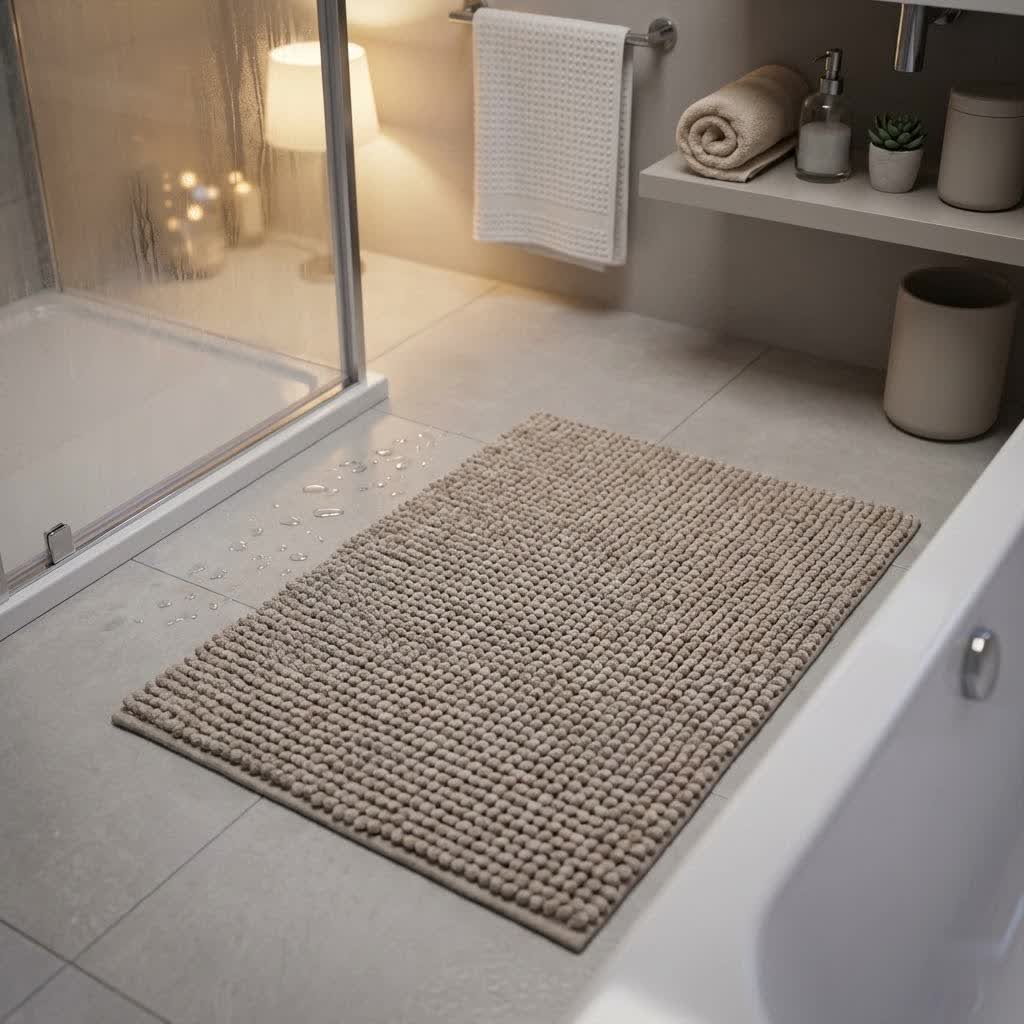
Stepping out of a warm, steamy shower or a relaxing bath should be a moment of pure comfort, not a precarious dance on a slippery, wet floor. This is where an absorbent bath mat becomes an unsung hero in your bathroom sanctuary, transforming a potential hazard into a plush, dry haven. With over a decade of experience reviewing home essentials, especially bath and floor mats, I understand the critical elements that make a truly exceptional absorbent bath mat—from its ability to soak up moisture quickly to its durability, safety features, and overall feel underfoot. Let’s dive into everything you need to know to select the ideal bath mat that perfectly blends functionality, safety, and style for your home.
What is an Absorbent Bath Mat and Why Do You Need One?
An absorbent bath mat is specifically designed to rapidly soak up water, preventing puddles and keeping your bathroom floor dry. Its primary role extends beyond mere decoration; it’s a crucial element for safety, hygiene, and comfort in any bathroom.
Using a high-quality absorbent bath mat offers several key benefits:
- Enhanced Safety: The most immediate advantage is preventing slips and falls on wet bathroom floors, a common household accident. A good mat provides a stable, dry surface when you exit the shower or tub.
- Improved Hygiene: By quickly absorbing water, these mats help inhibit the growth of mold, mildew, and bacteria that thrive in damp environments, keeping your bathroom fresher and more sanitary.
- Superior Comfort: Stepping onto a soft, plush mat after a bath or shower is a luxurious sensation that elevates your daily routine, providing warmth and cushioning underfoot.
- Floor Protection: Absorbent mats shield your flooring from water damage, preventing discoloration, warping, or other issues caused by prolonged moisture exposure.
- Aesthetic Appeal: Beyond its practical uses, a bath mat can tie together your bathroom’s decor, adding a touch of color, texture, and personality to the space.
Exploring the Most Popular Types of Absorbent Bath Mats
The material of your bath mat is the most significant factor influencing its absorbency, drying speed, and overall performance. Each material offers a unique set of advantages and considerations.
Cotton Bath Mats
Cotton has long been a traditional choice, prized for its natural softness and high absorbency. These mats soak up water efficiently, providing a plush feel underfoot. However, cotton can be slow to dry, making it susceptible to mildew and odors if not properly ventilated and regularly washed. It’s an excellent choice for everyday use where comfort is a priority, but may require more frequent attention in humid environments.
Microfiber Bath Mats
|
Our Picks for the Best Bath Mat in 2026
As an Amazon Associate I earn from qualifying purchases.
|
||
| Num | Product | Action |
|---|---|---|
| 1 | OLANLY Bathroom Rugs 30x20, Extra Soft Absorbent Chenille Bath Rugs, Rubber Backing Quick Dry, Machine Washable Bath Mats for Bathroom Floor, Tub and Shower, Home Decor Accessories, Beige |

|
| 2 | OLANLY Black Bathroom Rug 30x20, Extra Soft Absorbent Chenille Bath Rugs, Rubber Backing Quick Dry, Machine Washable Bath Mats for Bathroom Floor, Tub and Shower, Home Decor Accessories |
|
| 3 | OLANLY Bathroom Rugs 30x20, Extra Soft Absorbent Chenille Bath Rugs, Rubber Backing Quick Dry, Machine Washable Bath Mats for Bathroom Floor, Tub and Shower, Home Decor Accessories, Grey |
|
| 4 | Amazon Basics Premium 100% Cotton, Absorbent Soft Bath Mat, Machine Washable, 684 GSM, White, 30" x 20" Hotel Spa Shower/Bathtub Mats, Pack of 6 |
|
| 5 | GORILLA GRIP Bath Rug Mat, Thick Soft Absorbent Chenille, Quick Dry Microfiber Mats, Rubber Backing Washable Shower Floor Rugs, US Designed Bathroom Bathmat Home Decor Accessories, 24x17, Grey |
|
| 6 | OLANLY Bathroom Rugs 30x20, Extra Soft Absorbent Chenille Bath Rugs, Rubber Backing Quick Dry, Machine Washable Bath Mats for Bathroom Floor, Tub and Shower, Home Decor Accessories, Navy |
|
| 7 | Amazon Basics Fast Drying Cotton Washcloths for Bathroom, Machine Washable, Soft and Highly Absorbent, 12 x 12 in, White, 24-Pack |
|
| 8 | OLANLY Bathroom Rugs 30x20, Extra Soft Absorbent Chenille Bath Rugs, Rubber Backing Quick Dry, Machine Washable Bath Mats for Bathroom Floor, Tub and Shower, Home Decor Accessories, Sage Green |
|
| 9 | OLANLY Bathroom Rugs 30x20, Extra Soft Absorbent Chenille Bath Rugs, Rubber Backing Quick Dry, Machine Washable Bath Mats for Bathroom Floor, Tub and Shower, Home Decor Accessories, Light Grey |
|
| 10 | Amazon basics cotton washcloths, Lightweight quick-dry, 12" x 12", 12-pack, white |
|
Microfiber mats are crafted from ultra-fine synthetic fibers, offering a smooth, lightweight feel and exceptional quick-drying properties. They wick moisture away from your feet and dry significantly faster than traditional cotton, making them ideal for busy households, children’s bathrooms, or humid climates where rapid drying is essential to prevent mildew. Microfiber is also known for its excellent absorbency and is often lightweight and easy to clean.
Bamboo/Diatomaceous Earth Mats
These materials represent a modern, often minimalist approach to bath mats. Bamboo mats, made from slats of natural wood, do not absorb water in the traditional sense; instead, water evaporates very quickly from their surface, making them highly resistant to mold and bacteria. Diatomaceous earth (or stone) mats, on the other hand, are incredibly absorbent, soaking up water almost instantly and drying within seconds, thanks to their porous structure. Both offer a sleek, spa-like aesthetic and are highly durable, though they lack the plush comfort of fabric mats. They are perfect for humid bathrooms or those seeking a highly hygienic, fast-drying solution.
Memory Foam Bath Mats
Memory foam mats are renowned for their luxurious, cushioned support, molding to the shape of your feet for unparalleled comfort. They provide excellent insulation against cold floors and offer a spa-like experience. While many memory foam mats feature an absorbent microfiber top layer, the foam core itself can retain moisture, making them slower to dry and potentially less ideal for high-moisture areas unless they have a removable, fast-drying cover. They require gentle washing and careful air drying to maintain their shape and integrity.
Chenille Bath Mats
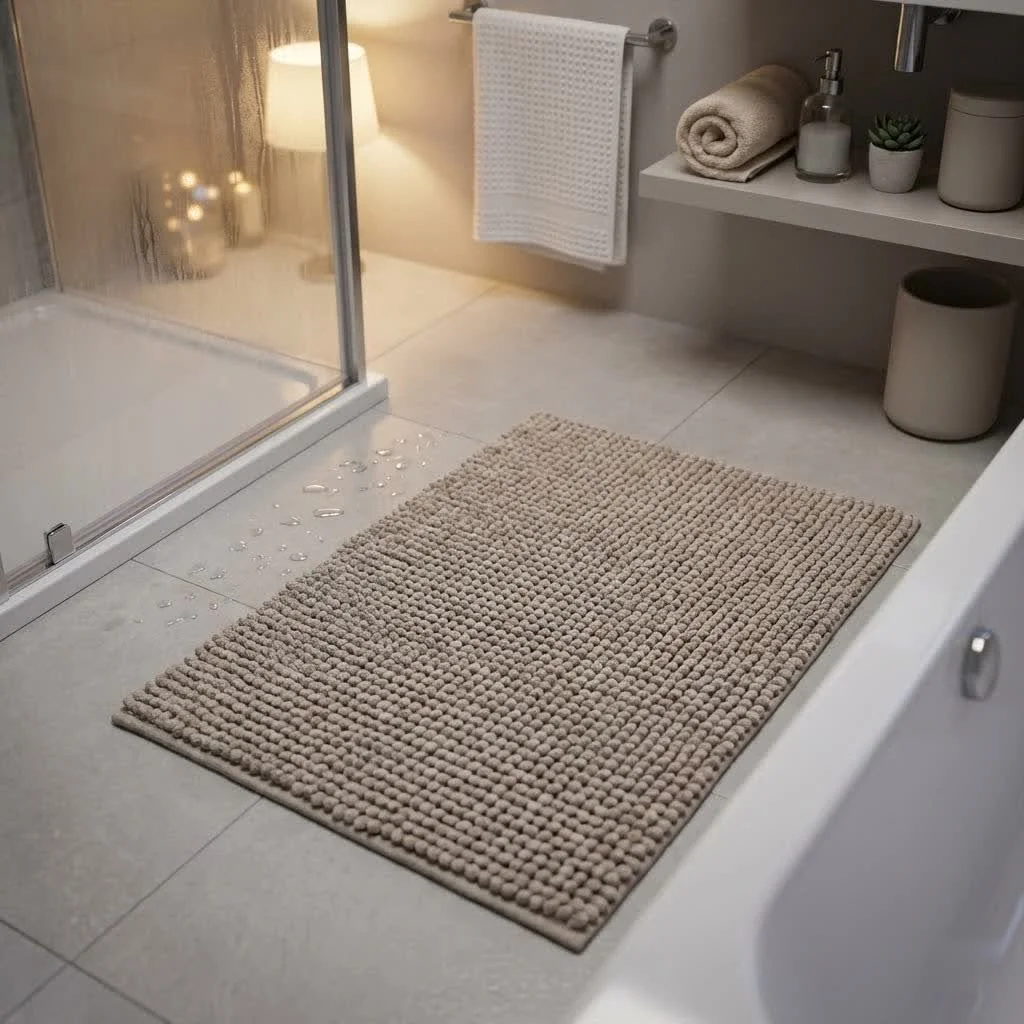
Chenille bath mats are recognized by their thick, shaggy texture, which delivers a cozy and inviting feel. They offer good absorbency and dry faster than dense cotton options. Often featuring anti-slip backings, chenille mats add warmth and dimension to a bathroom. However, their textured surface can sometimes be more challenging to clean thoroughly, and heavy use may lead to fibers flattening over time without proper care.
Rubber/PVC Mats
Primarily designed for safety, rubber or PVC mats are waterproof and provide superior non-slip properties, often with suction cups to secure them firmly in place. While they excel at preventing slips and protecting floors from puddles, they do not absorb water themselves. These mats are best suited for inside the shower or tub where direct water resistance and grip are paramount, rather than for general floor absorbency.
Polyester Bath Mats
Polyester bath mats are a practical and budget-friendly option. They are lightweight, machine washable, and dry quickly, often treated to resist moisture and odors. While they may not offer the same luxurious softness as cotton or memory foam, they come in a vast array of colors and patterns, making them a versatile choice for guest bathrooms or for shoppers prioritizing affordability and easy maintenance.
Comparison Table: Understanding Your Absorbent Bath Mat Options
| Type of Mat | Absorbency | Drying Speed | Durability | Typical Cost | Key Characteristics |
|---|---|---|---|---|---|
| Cotton | High | Moderate | Good | Low-Mid | Soft, natural, comfortable; can take longer to dry, prone to mildew if not aired. |
| Microfiber | Very High | Fast | Good | Low-Mid | Lightweight, quick-drying, resists mildew, very soft; excellent for humid climates. |
| Bamboo/Stone | Very High | Very Fast | Excellent | Mid-High | Sleek, natural, anti-bacterial; stone absorbs, bamboo evaporates; no plush feel. |
| Memory Foam | Moderate | Slow | Fair-Good | Mid-High | Cushioned comfort, warm; can trap moisture if not properly dried, requires gentle care. |
| Chenille | High | Moderate | Moderate | Low-Mid | Soft, shaggy, cozy; can be harder to clean, fibers may flatten. |
| Polyester | Low-Moderate | Fast | Moderate | Low | Budget-friendly, quick-drying, wide variety of designs; less soft, wears faster with heavy use. |
| Rubber/PVC | None | Instant | Very High | Low | Waterproof, excellent non-slip; primarily for safety and water containment, not absorption. |
Key Factors to Consider When Buying an Absorbent Bath Mat
Choosing the perfect absorbent bath mat goes beyond just picking a color. Consider these essential factors to ensure it meets your specific needs and bathroom environment.
Material
As detailed above, the material dictates absorbency, drying speed, and feel. Prioritize materials like microfiber or diatomaceous earth for maximum absorbency and quick drying in high-traffic or humid bathrooms. For a plush feel in a less humid space, cotton or memory foam can be excellent.
Size and Thickness
Measure your bathroom space to ensure the mat fits well without obstructing doors or creating a tripping hazard. It should cover the main exit area from your tub or shower. While a thicker mat can feel more luxurious and absorb more water, overly thick mats can take longer to dry and might trap moisture underneath, leading to odors. Aim for a balanced thickness that offers both comfort and efficiency.
Absorbency
This is the core characteristic. Look for mats explicitly stating “high absorbency” or “quick water uptake.” Microfiber and diatomaceous earth are generally top performers in this regard.
Safety: Non-Slip Backing
A crucial safety feature, especially on tiled or smooth bathroom floors. Ensure the mat has a robust non-slip backing, typically made from rubber, silicone, or latex, to prevent it from sliding when wet. This is paramount for households with children, the elderly, or anyone with limited mobility.
Durability
A good absorbent bath mat should withstand frequent use and washing without losing its shape, color, or absorbency. Look for mats with tight weaves, dense fibers, and quality construction that resist pilling or shedding.
Ease of Cleaning
For busy bathrooms, a machine-washable mat is a game-changer. Most cotton, microfiber, chenille, and polyester mats are machine washable, simplifying maintenance and ensuring hygiene. Always check care instructions to maximize longevity.
Color and Design
The mat should complement your bathroom’s aesthetic. Whether you prefer a minimalist look with neutral tones or a vibrant pop of color, select a design that enhances the overall atmosphere. However, as home decor pros suggest, avoid overly elaborate or thick-piled designs that might trap moisture, leading to mildew.
Brand Reputation
While not always explicitly detailed, reputable brands often provide better quality and durability. Reading recent shopper reviews on retailer sites can offer insights into real user experiences and how well mats hold up over time.
Top Picks: Highly-Rated Absorbent Bath Mats
Based on extensive testing and user reviews, several bath mats consistently stand out for their exceptional absorbency, quick-drying capabilities, and overall performance:
- Genteele Memory Foam Bath Mat: Often lauded for its plush, soft feel and impressive absorbency, this memory foam mat provides comfort and a firm grip. It’s a popular choice for those seeking a luxurious, spa-like experience with effective water absorption.
- Gorilla Grip Original Chenille Bath Mat: This chenille mat is recognized for its superior absorbency and soft, shaggy texture. Its anti-slip backing ensures safety, making it a reliable option for busy bathrooms where both absorbency and comfort are desired.
- Sutera Stone Bath Mat: For those prioritizing ultra-fast drying and a sleek, modern aesthetic, the Sutera Stone Bath Mat (made from diatomaceous earth) is a top contender. It rapidly absorbs water and dries almost instantly, naturally resisting mold and mildew, though it offers a firm rather than plush feel.
- Legends Hotel Regal Cotton Bath Rug: A high-quality cotton option, this rug is celebrated for its thickness, absorbency, and relatively quick-drying nature for a cotton mat. It provides a classic, comfortable feel without sacrificing performance.
- Yimobra Memory Foam Bath Mat Rug: A budget-friendly yet highly effective option, this mat offers fast water absorption and quick drying. It’s comfortable underfoot and stays securely in place, proving that you don’t need to overspend for a great absorbent bath mat.
Tips for Cleaning and Maintaining Your Absorbent Bath Mat
Proper care is essential to maintain your bath mat’s absorbency, freshness, and longevity.
- Wash Regularly: For heavy-use bathrooms, wash your bath mat every 1-2 weeks to prevent bacteria buildup and musty odors. Less-used guest baths might be fine with monthly washes.
- Air Dry Between Uses: Whenever possible, hang your mat to air dry thoroughly between uses. This significantly speeds up drying and prevents moisture from lingering, which is key to avoiding mildew.
- Avoid Fabric Softeners: Fabric softeners can clog the fibers of many bath mat materials, reducing their absorbency over time. Stick to regular detergent.
- Shake Out Dirt: Give your mat a good shake outdoors before washing to remove loose dirt, hair, and debris.
- Follow Care Instructions: Always refer to the manufacturer’s specific washing and drying instructions, as different materials may have unique requirements. For memory foam, gentle washing and air drying are typically recommended.
- Replace When Needed: If your mat becomes threadbare, loses its absorbency, or develops a permanent musty smell even after washing, it’s time for a replacement.
“A good bath mat not only keeps you safe but also brings a sense of comfort and relaxation after a long day.” – Nguyễn Thị An, Interior Design Expert
Conclusion
Choosing the right absorbent bath mat is a small decision that yields significant daily benefits, enhancing both the safety and comfort of your bathroom. By understanding the unique properties of different materials—from the plush luxury of cotton and memory foam to the rapid-drying efficiency of microfiber and diatomaceous earth—you can make an informed choice that aligns with your lifestyle and bathroom environment. Prioritizing features like absorbency, quick-drying capabilities, and a reliable non-slip backing will ensure your selection keeps your floors dry, your bathroom hygienic, and your steps secure.
Which type of absorbent bath mat will transform your bathroom into a safer, more comfortable oasis?
Frequently Asked Questions
How often should I wash my absorbent bath mat?
For busy bathrooms, it is ideal to wash your bath mat every 1-2 weeks to prevent odors and bacteria buildup. In less frequently used guest bathrooms, monthly washes might suffice, but regular airing is always beneficial.
Are memory foam bath mats good for absorbing water?
Memory foam bath mats offer exceptional comfort and cushioning, but their absorbency can be moderate, and they tend to dry slower than other materials like microfiber. They are best suited for areas where plush comfort is a priority and drying time isn’t a critical concern, or if they feature a fast-drying cover.
What is the safest type of bath mat to prevent slips?
Mats equipped with a strong non-slip backing made from rubber, silicone, or latex are the safest to prevent slips, especially on smooth tile floors. Low-profile designs are also recommended for ease of stepping on and off, particularly for seniors.
Can bamboo mats really dry faster than fabric ones?
Yes, bamboo and diatomaceous earth mats are known for their incredibly fast drying times. While bamboo mats typically allow water to evaporate quickly from their surface rather than absorbing it into fibers, diatomaceous earth mats absorb water rapidly and dry almost instantly, significantly reducing mold risk.
What size absorbent bath mat works best for a standard bathroom?
The best size depends on your specific bathroom layout. A bath mat should be wide enough to cover the main exit area from your tub or shower without becoming a tripping hazard. A common size is around 20×30 inches, but measuring your space will ensure the best fit.
Get our weekly buyer guide
Practical specs, not advice. Unsubscribe anytime.

I tried one of the memory foam mats because I liked the idea of the plush feel underfoot. It’s definitely soft and comfortable, but I’ve noticed it takes a bit longer to dry out completely compared to what I expected. It’s not a huge issue, but sometimes it feels a little damp if multiple people shower close together. Still, it’s better than my old cotton one.
I finally replaced my old, flimsy bath mat with one of the quick-drying diatomaceous earth mats you mentioned, and it’s a game changer! No more soggy mat after everyone showers. It really does absorb water instantly and keeps the floor completely dry. I’m so glad I invested in a good quality one.
I was looking for something with good grip because my old mat always slid around. The one I got, a microfiber mat with a non-slip rubber backing, works perfectly. It stays put even when wet, which makes me feel a lot safer stepping out of the shower. The absorbency is great too, no complaints there.
My bathroom used to be a slip hazard after every shower, but not anymore! I picked up a chenille bath mat after reading about its high absorbency, and it’s fantastic. It soaks up all the water and feels super soft. It’s made a huge difference in keeping my bathroom floor dry and safe.